
News


Exclusive interview of the President of the Republic of Uzbekistan Shavkat Mirziyoyev to the Euronews TV channel

A memorandum of cooperation was signed between the Competition Policy and Consumer Rights Research Center under the Competition Committee and the BRICS Competition Law and Policy Centre

International Seminar

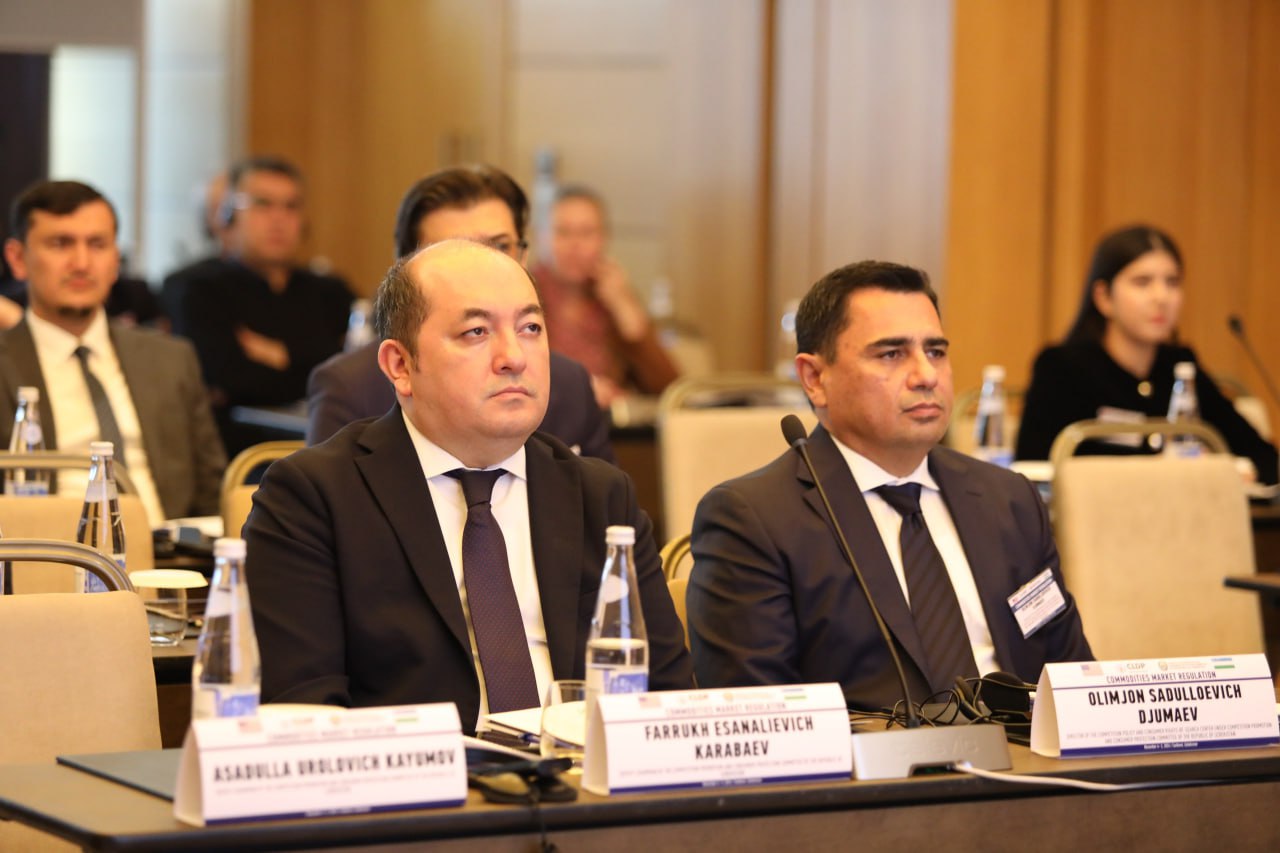
International cooperation: discussion of experience in developing competition in the pharmaceutical market

Development of alternative construction technologies
Within the framework of the State Program on implementation of the strategy “Uzbekistan - 2030” in the year of environmental protection and green economy from August 1, 2025, the construction organizations, which from the production of burnt bricks switched to the production of materials such as foam blocks and gas blocks, on the platform “Shaffof kurilish” will be given priority to stimulate the transition to the widespread use of alternative technologies. Also, from January 1, 2027, to protect land resources and prevent the loss of fertile soil layer, sand quarries are prohibited on lands for agricultural, environmental, health, and recreational purposes, lands of historical and cultural purposes, and forest and water funds.

The social tax rate for trade and service businesses is to be extended
On February 7 this year, under the chairmanship of the President of the Republic of Uzbekistan, a video conference call was held on developing services in the regions. One of the main proposals at the meeting was the extension of a social tax rate of 1% for enterprises in the sphere of trade and services. For 2 years since the implementation of the preference, the number of enterprises has increased 1.5 times. Many entrepreneurs began to correctly reflect monthly wages and the labor remuneration fund increased 3.2 times. That provided additional revenues to the budget in the amount of 2.1 trillion soums. In this regard, it was decided to extend the preference for another three years.

Uzbekistan to introduce a fee for international courier parcels
A new procedure for importing goods from foreign marketplaces has been introduced in Uzbekistan. Now, for 1 kg of imported parcels, 2% of the basic calculation value must be paid. The new rules will also apply to sending parcels between individuals. Today the norm of duty-free imports is up to $1000 and if this limit is exceeded, individuals must pay 30% of the excess. This measure aims to reduce shadow imports and preserve fair competition in the local market. At the same time, consumers will not pay the fee directly, but it may be included in the cost of transporting services.

Help line
Do you have any statements, complaints or suggestions? Contact Us via our helpline